4300 km – Jan 19, 2026
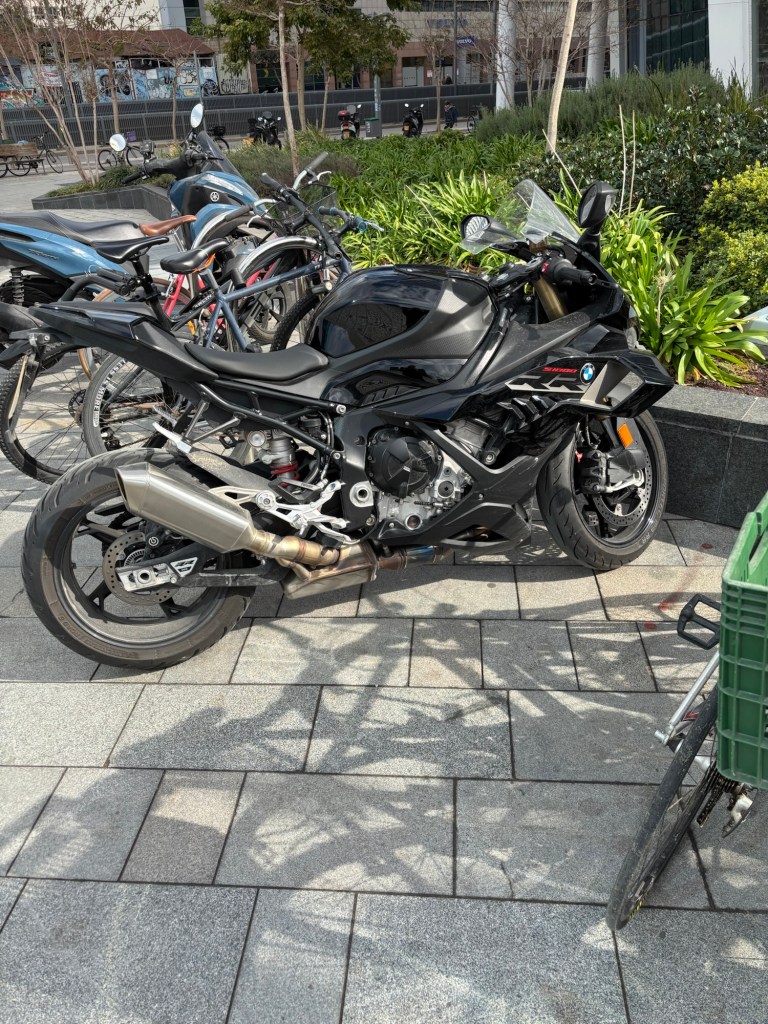
4900 km – Jan 25. 2026 – Morning ride on route 60
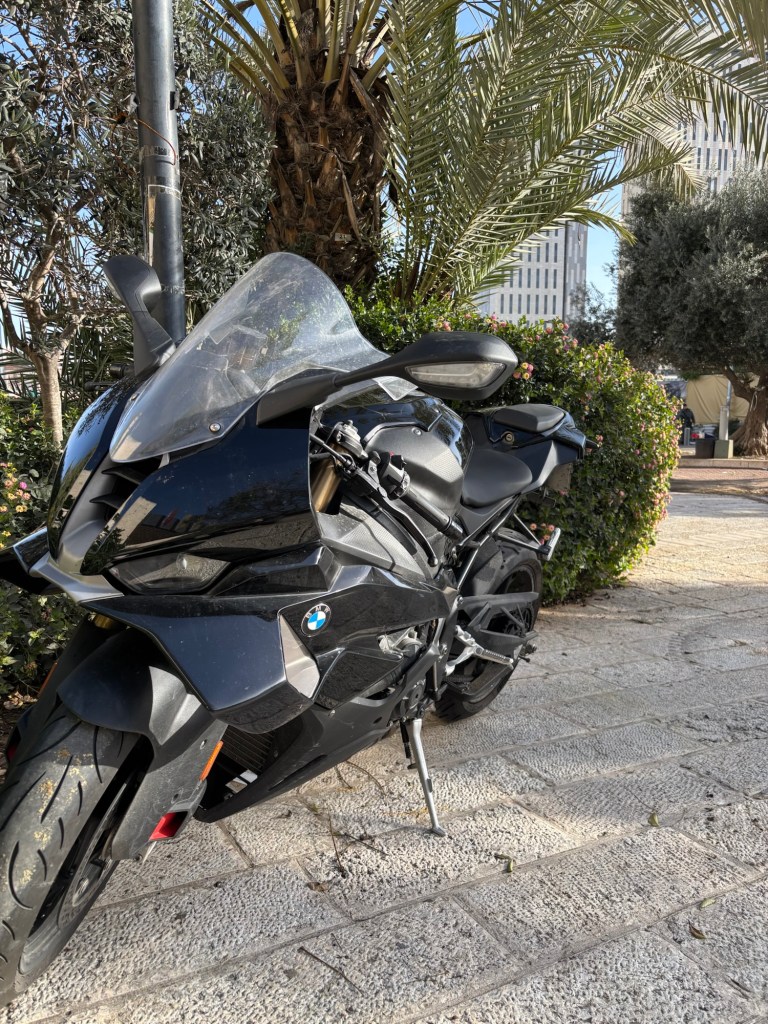
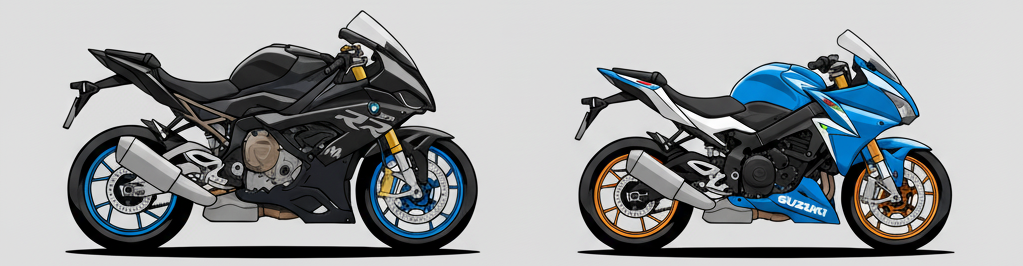
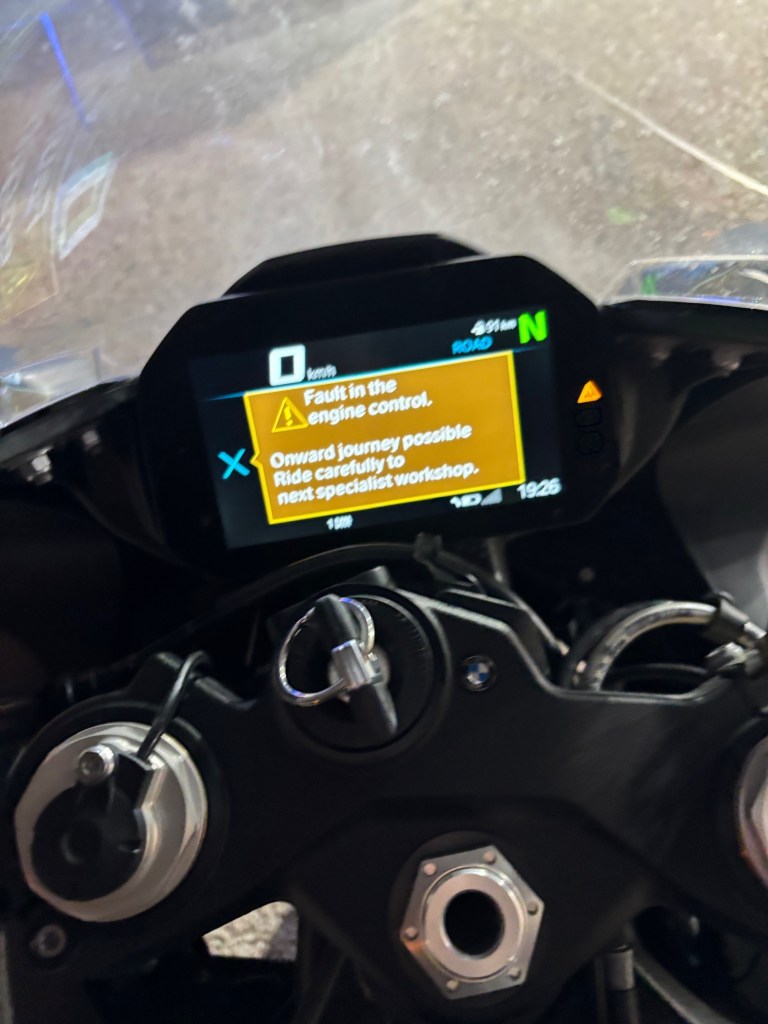
After about 3000 KM, suddenly a fault message appeared. I was alarmed at first, but, as it states, “onward journey possible” so I continued riding and the fault went away. After 600 KMs it appeared again and this time I decided to go to the BMW Petakh Tikva Service Center to have it checked.
At the center they connected the diagnostics terminal but couldn’t find the fault even in the history folder. They took out the motorcycle to a long ride, but it did not appear.
Since then it flashed again for a moment but didn’t even leave the yellow warning triangle (as it appears in the photo below).
So I’m wondering what to do and how to diagnose the problem. So far, it seems that the operation of the motorcycle is not affected and I’m not bothered by it very much.
But, if anyone from BMW ever reads these words, please update your SW so that if a fault is indicated, then keep it in the history folder. You can’t send the rider to a workshop only to discover there’s no trace of the problem. Thank you in advance.
The running-in period of 1000 KMs lasted about a week and I made a reservation for the first maintenance appointment at the BMW Service Center in Petakh Tikva, a town on the outskirts of Tel Aviv. The service center is located only 300 hundred meters from the site of my former beloved employer – Intel.
When I imagined how a BMW service center is like I had very limited success because, unfortunately, I’m an software engineer and not a poet. As the matter stands, SW engineering is not really an engineering discipline – its not like building a bridge that can stand up to daily traffic. Its more about building these bridges in one’s imagination, so imagination is involved, but in a structured way. So I’ll try my hand, in this post, at structured poetry.
We learned in the army that every good thing is divided into three parts. When referring to the BMW Petakh Tikva Service center, these three things are:
So lets dig in, and start with the human touch.
Since December 1st I rode already almost 4000 KM and visited the service center 5 times. This is, of course, a large number of visits and the reasons for this large number will become evident in the following posts in this blog.
The important point is that after these 5 visits I feel that the staff of the Motorrad department are my good friends and I trust them with anything related to my new and precious motorcycle.
When I first entered the service center for the running-in (1000 km) maintenance call, I met Edi, the service specialist. Edi welcomed me pleasantly and explained the procedures and options for everything. Most importantly, he gave me his phone number and said I can call or text him for anything, and I already used that option not once. Soon after the first visit, I needed extra help and Edi spent time with me, collected information, revised the information, browed parts databases online with me and all of that for no extra charge, kindly and pleasantly.
On my first visit I also met Nahik, the manager of the Motorrad department. Nahik also gave me his phone number and asked to call him immediately for any issue, which I did just one day later.
I met Eli, the workshop manager who patiently explains everything and answers all my questions. I also spoke with some of the mechanics who also answer every question and explain what they are doing (and of course, the customers are expected to stay out of the workshop area for most of the time).
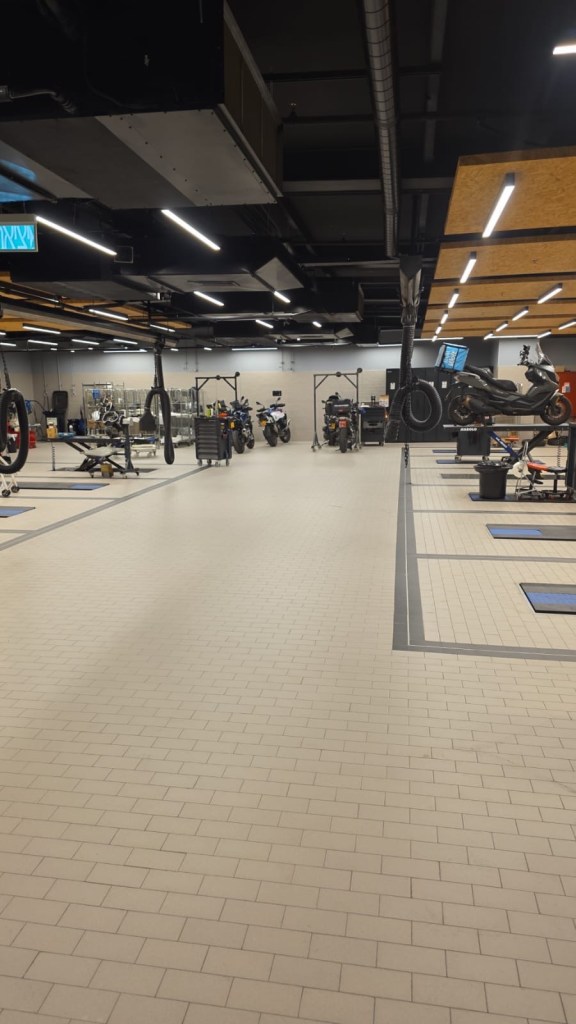
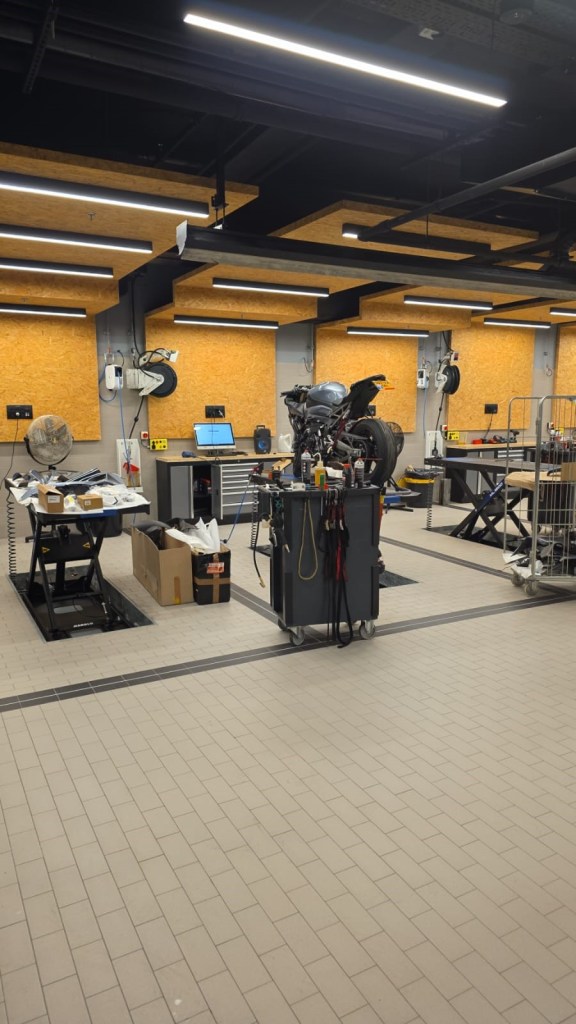
The first thing I noticed when I entered the motorcycle department is the total cleanliness – even cleaner than in hospitals, and I scored quite a large mileage in hospital’s as you’ll be able to read in the Hebrew parts of this blog.
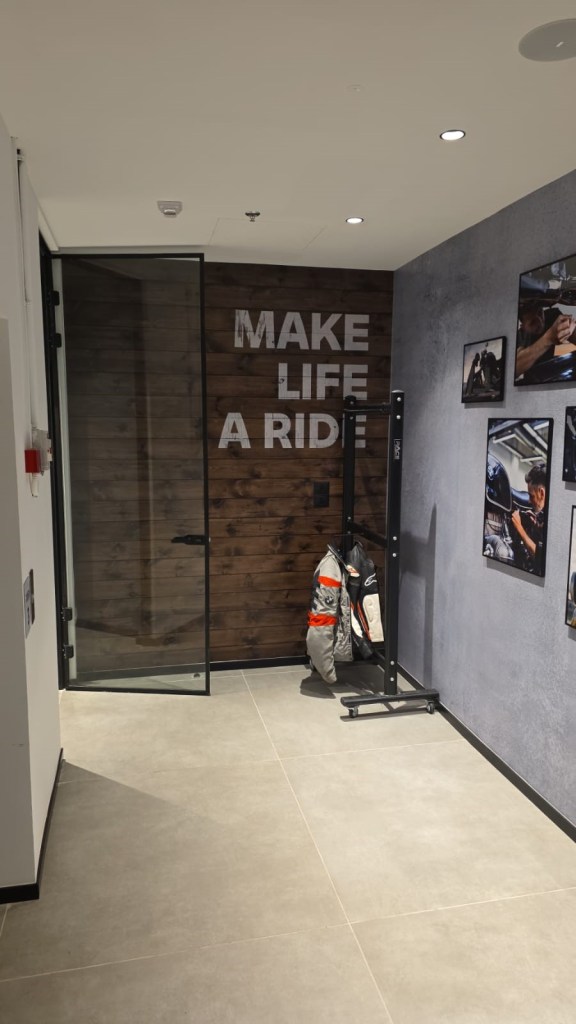
There’s a jacket and helmet hanger in the entry hallway.
Here are some photos of the workshop area.

The customer waiting area is separated from the workshop by a glass wall. The waiting area is spacious and comfortable with 2 sofas and a large desk on which I can sit and work on my laptop.
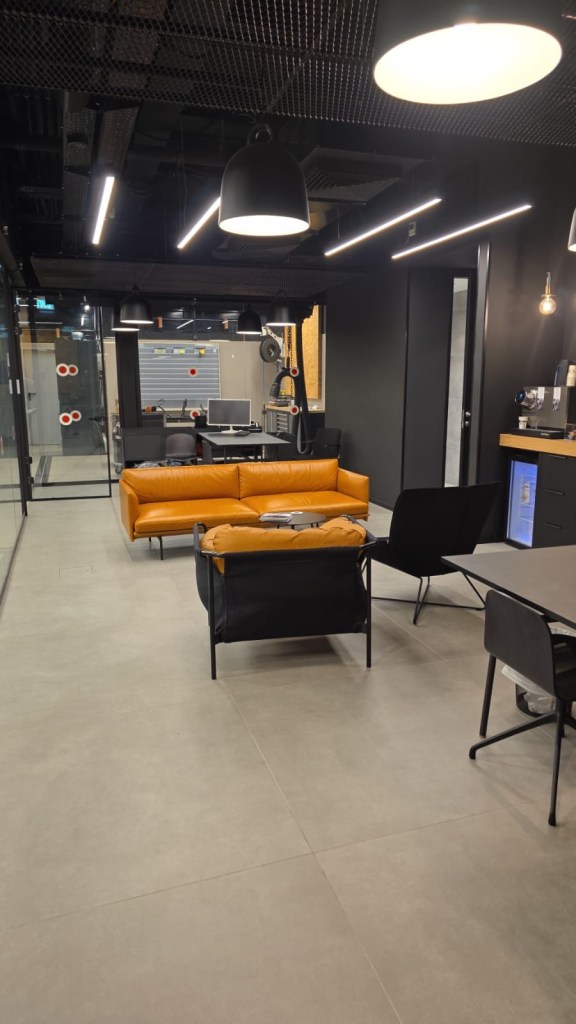
What really sets BMW apart from all the other service centers that I visited are the snacks, fruits, a coffee machine, Coca Cola cans (!) and even alcoholic drinks (!!!).
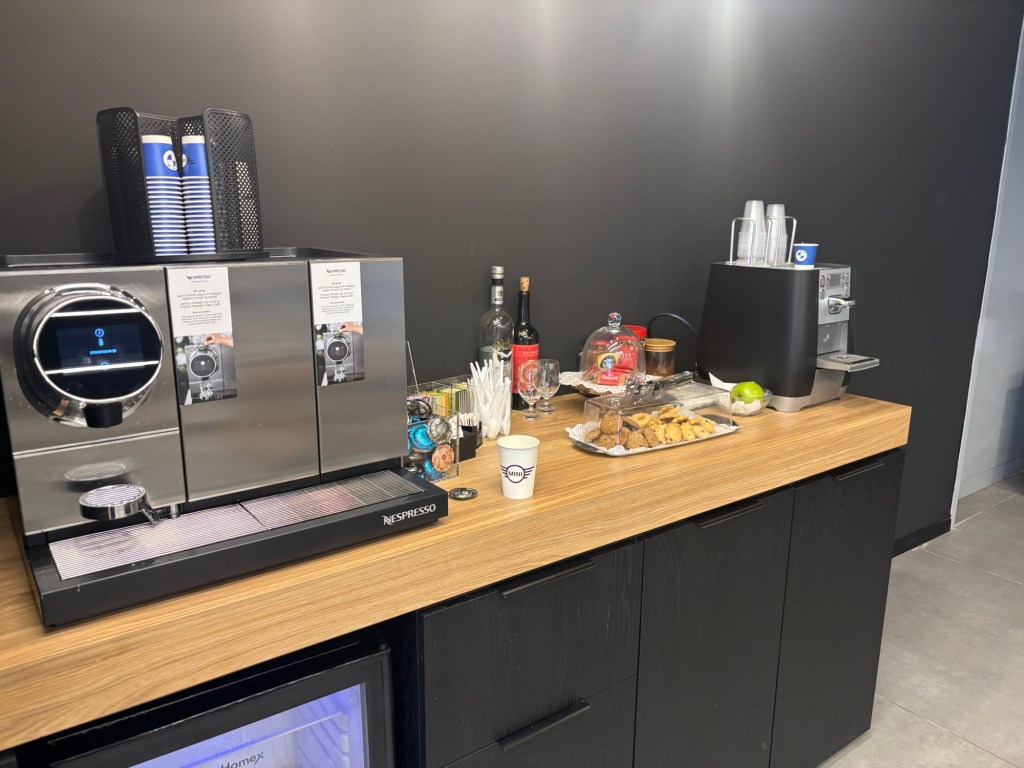
Free food is a great benefit. In one of the recent company meetings of NVIDIA, Jensen admonished the assembled employees and said something like:
– You are all millionaires here, so why, when there are some refreshments outside, do you storm the tables like a herd of starved buffalos?
So free food is great even for people who ride BMW motorcycles.
It seems, and I believe, that the Service Center operates according to the highest standards and procedures specified by BMW. What I liked most, so far is:
And, an important note – the photos are used by permission from the Service Center.
After many fruitful years of being driven around by a driver, the Pope had a sudden urge to drive the popemobile a little, just to see if he still remembers how to drive. So he asked his driver
– Do you mind if I’ll drive back home today?
The driver thought a bit and then agreed. The Pope and his driver switched places. The Pope was happy to see that he still drives very well. They approached the gates of the Vatican and the Swiss Guard at the entrance waved them to stop. Suddenly the Swiss Guard fainted and fell. The other guard waved the popemobile in and woke up his friend.
– What happened to you?
– You won’t believe who just came in, said the still dazed guard
– Who came in?
– I don’t know, but the Pope is his driver!
I remembered this joke when I realized that on my S-1000 RR, the rear brake is a Brembo!

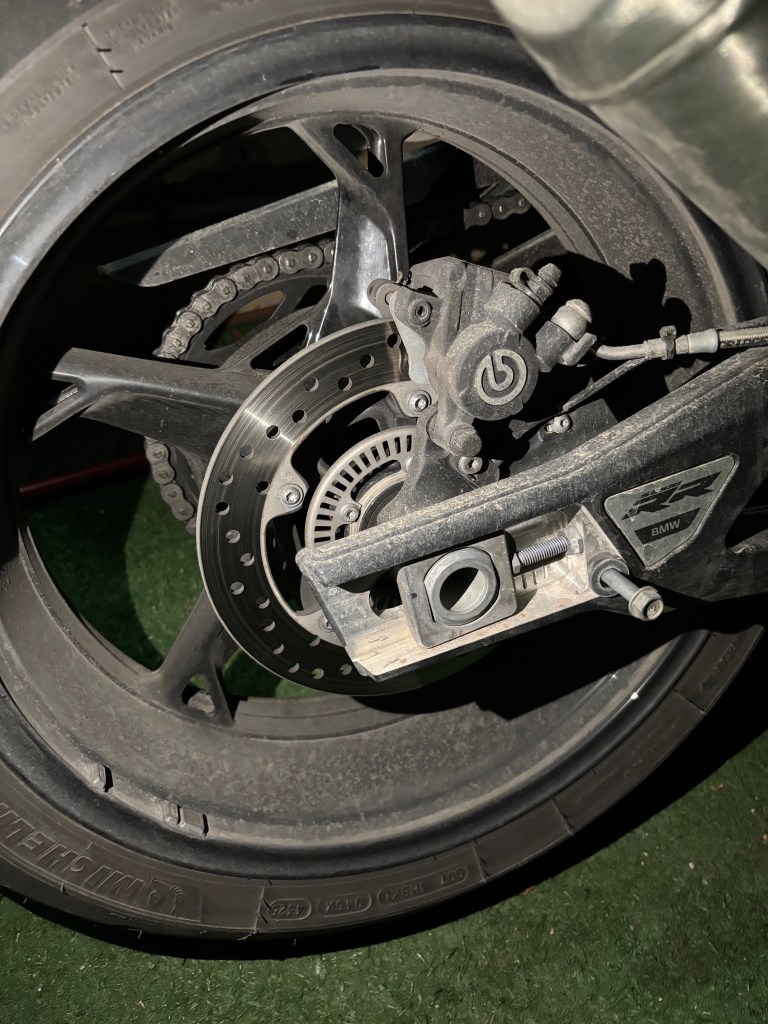
The running-in (or break-in) period of the S1000 RR is for 1000 km. During this time its limited to 8000 RPM, so it is relatively slow.
The first few days of riding it were quite hard on me. The reasons are very simple.
The hard suspension
The suspension is extremely hard, especially for someone coming from a Suzuki VStrom. The S1000 RR has several riding modes in which the suspension turns harder and harder. But even in the softest mode called “rain”, and even driving at most at 8000 RPM, I could feel every microscopic bump in the road.
The pressure on my wrists
I live on a hill and the daily ride to work starts with a steep downhill slope. This downhill slope serves also, unfortunately, the other residents of my town, so I have to slow down often while riding to the stop light at the end of the road. I found that breaking while riding slowly, down a hill puts so much pressure on my wrists, that I started dreading this daily part of the ride.
The uncomfortable riding position
I think there’s no need to elaborate on it, especially for an old guy like me.
The heat
The S1000 RR exudes a tremendous amount of heat from its engine. This came to me as a bit of a surprise, because my Suzuki GSX S-1000 also had a 999 cc engine and I never felt any heat around it. The S1000 is still much better than that Suzuki GSX-GX that I had for a year and blew a scorching hot stream of air into my right ankle while driving.
Coming back to the S1000 RR – its winter now, so this heat is actually comfortable, but I’m thinking of how I would survive the summer with 38 degrees Celsius outside.
The positive aspect of heat management of the S1000 RR is that, while driving, the hot air is dispersed very effectively and my body is covered in a cool and fresh breeze. But, since I’m riding to work, a certain part of the ride is in traffic and I stop at stop-lights. Then the air radiates from the engine upwards towards my body.
So we’ll wait for summer and see.
In addition to these points, there are a few more features that could be improved in a daily bike (and I do understand that the S100-RR was made for racing, not for daily commute :-)). They are:
The turn signal button
The turn signal button is located too far on the right and I can’t reach it with my thumb. The only way to use it is to loosen my grip on the handlebar and move my hand to the right. I assume that in a few days I’ll acquire the muscle memory that will allow me to use it without thinking.
Another problem is that neither the signal button, nor the button that stops the signal, provide any tactile feedback. This is a change from all Suzuki models that did give excellent feedback.
The nice feature about S1000’s turn signal is that it turns off by itself, if so configure. And the bottom line, is that its not really needed.
But, having written all these bad things about my baby, I started falling in love with it even in this first week.

The Daily RR – photographic record
So at the age of 57 I decided to start riding a super sport bike and on December 1st, 2025 I went to the dealership to pick up my new BMW S1000 RR.
Click on the links below to follow my journey with this new baby.
| Running-in period – challenges |
| What’s really special |
| The BMW Petakh Tikva Service Center |
| Fault in engine control and a plea to BMW engineers |
| My first accident |
| What do I like in my S1000-RR after 4600 KM |
And here’s my very first moment with my baby.
My baby – a Suzuki GSX-S 1000 FA

It is over 3 years old and I just passed 100,000 km on it. So from now on I’m going to treat it gently and even try to maintain it myself. I will share everything that I learn in this blog.
I’ll try to resist uploading videos of the top-speed kind.
One of the top financial concerns in owning a super-sport bike, or even a slightly toned-down version like mine, is the price of parts. I’m trying to save on parts and I will share my finding here, I hope this will help someone.
Some of the information may be more relevant to Israelis, so some of the posts are in Hebrew.
 Eli's Blog